
Protecting our ocean, coastal communities, and fishermen from offshore wind industrialization
Save the East Coast is a non-partisan ocean environmental advocacy group based in NJ determined to protect the ocean, coastal ecosystems and coastal communities from the harms and costs associated with offshore wind industrialization.
The purpose is to advocate on behalf of all impacted marine species, the livelihoods of fisherman and others that make a living on the water, as well as local and seasonal residents, small businesses and tourists that will be devastated by the reckless transformation of our coastal waters into industrial power generation and transmission facilities.
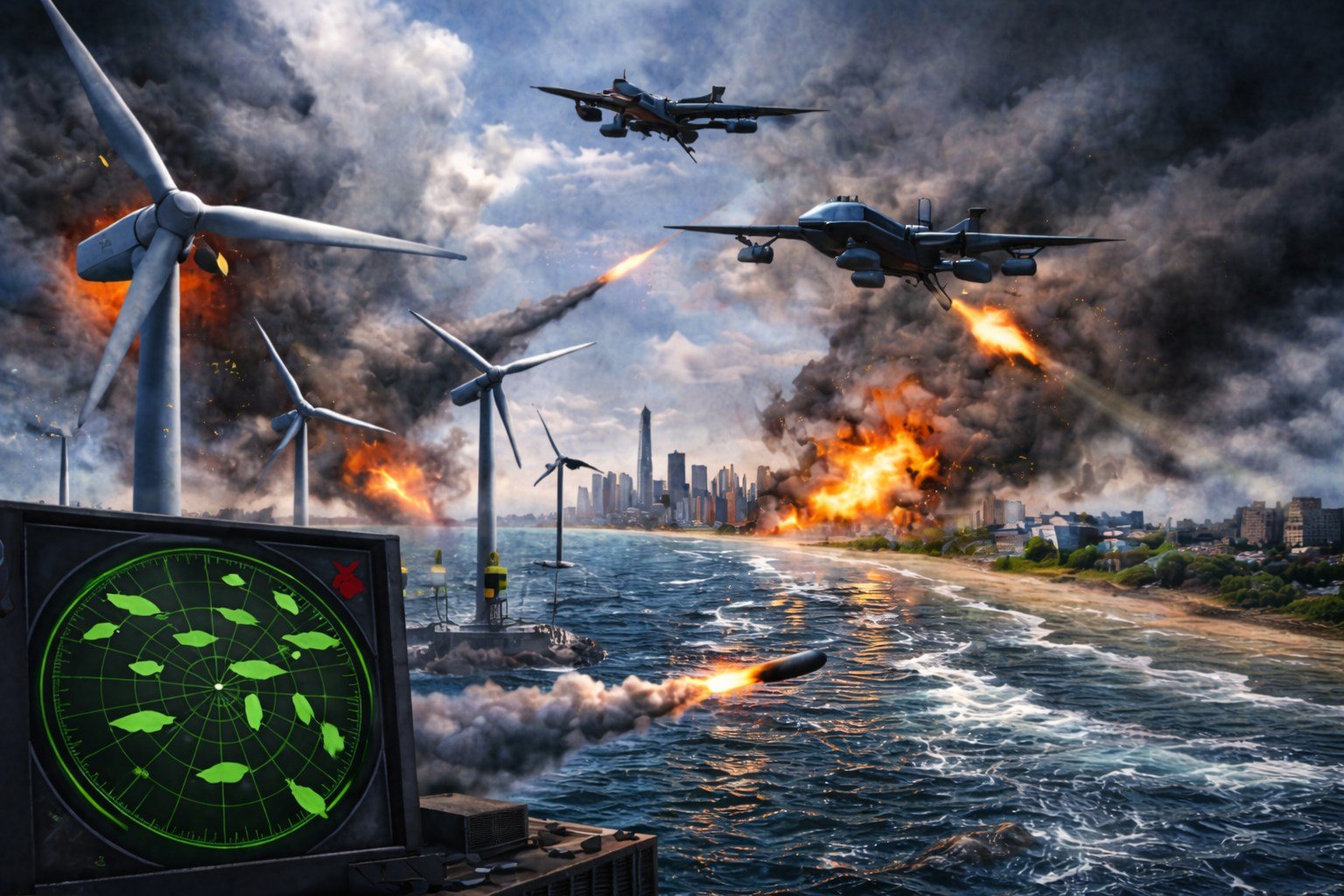
Offshore Wind Can Create Dangerous Blind Spots
Wind turbines can interfere with radar performance, complicate detection, and add clutter in already sensitive coastal surveillance environments. At a time when U.S. officials are openly discussing maritime and drone-related homeland security scenarios, even the possibility of reduced visibility offshore should be taken seriously. Our ocean should not become a zone of avoidable risk. Protect our coast. Remove industrial wind from our waters.
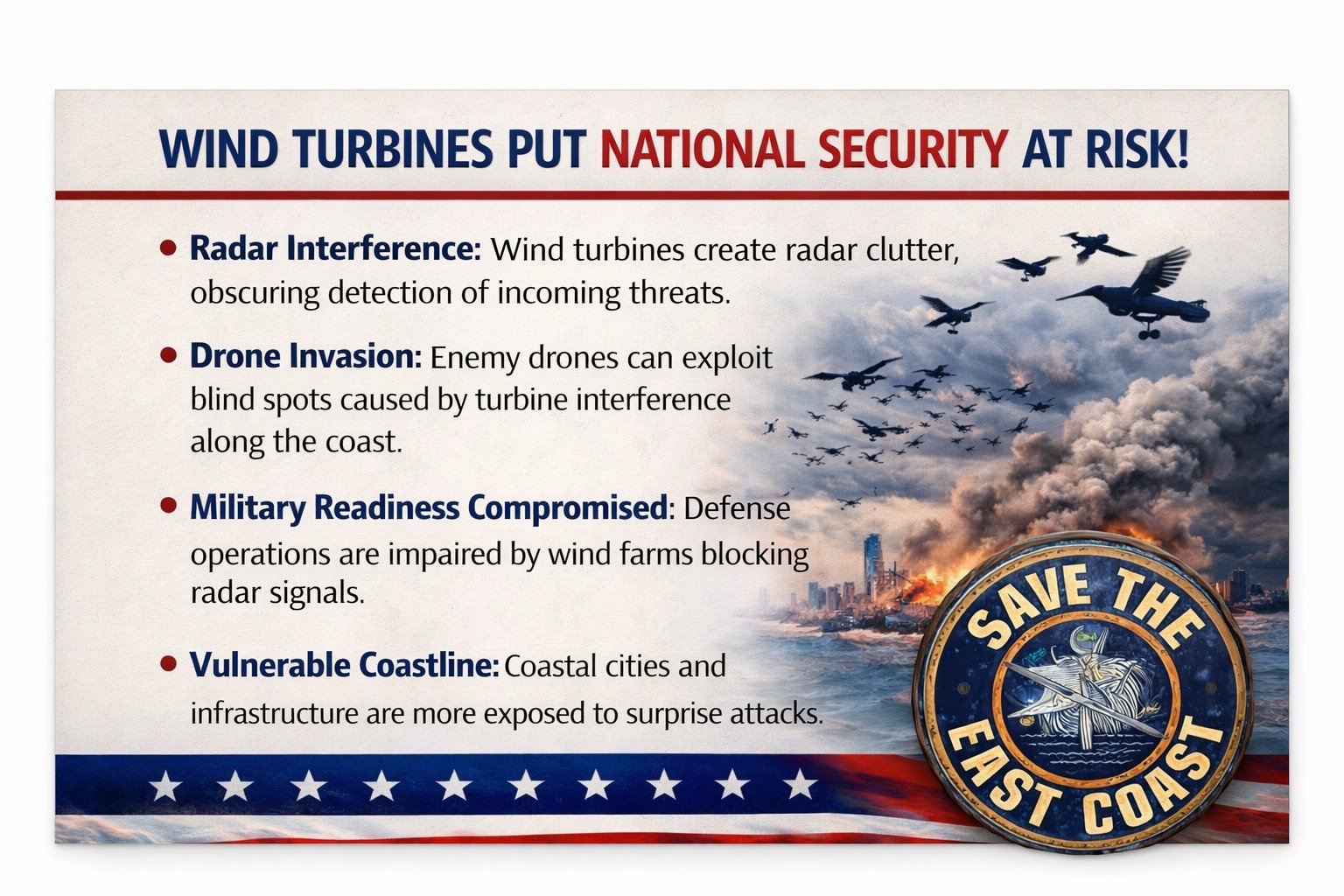
National Security Must Come Before Offshore Wind
Coastal radar and surveillance systems exist to detect threats early and protect American cities, infrastructure, and shorelines. Offshore wind turbines can interfere with those systems by adding clutter and reducing clarity in already sensitive detection environments. At a time when drone threats and maritime risks are increasing, we should not be placing large industrial obstacles in strategic coastal waters. Protect our coast. Protect our security. Remove offshore wind from our oceans.
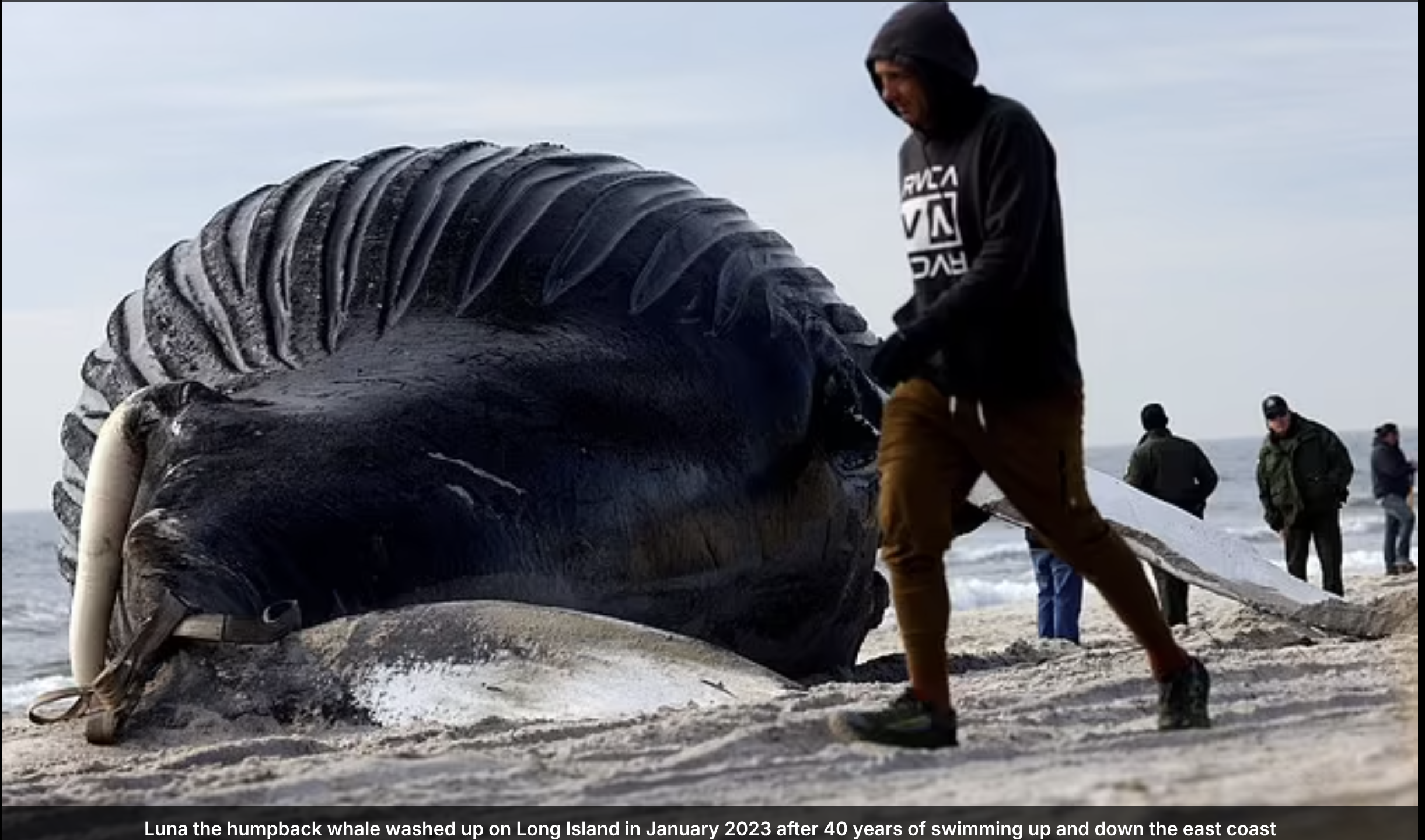
Sonar and Pile Driving Can Harm Whales
The science is clear that powerful underwater noise can injure marine mammals. The U.S. Navy concluded that high-intensity sonar caused a whale stranding event in the Bahamas. Bob Rand’s offshore wind noise reports measured high underwater sound levels from both survey activity and pile driving, while NOAA’s own guidance says such sound exposure can cause temporary or permanent hearing loss, behavioral disruption, and even mortality-related effects in marine mammals. Offshore wind industrialization adds more dangerous noise to waters whales depend on for survival (see Nature.)
NOAA’s 2024 biological opinion, as reported by The New Bedford Light, says pile-driving noise from Vineyard Wind is expected to “adversely affect” marine mammals and that a small number of whales of some species may experience temporary to permanent hearing impairment from the noise (See The New Bedford Light).
NOAA’s own acoustic-threshold guidance says marine mammals exposed to elevated underwater sound can suffer mortality, temporary or permanent hearing impairment, non-auditory physical effects, and behavioral disturbance. (see NOAA Fisheries).
Contact
Feel free to contact us with any questions.
Email
info@savetheeastcoast.org